Planting Colorful Containers
Containers: How to choose them:
Characteristics of a pot
Look for pots treated with UV light inhibitors, prolongs and reduces fading.
Construction of the pot. Too thin, it may become brittle and crack. Generally, these plastic replications tend to be extremely weatherproof and can be left outside in the winter. Since they are light can blow over in the wind and they are not good insulators for heat or cold.
All containers must have good drainage holes
Synthetic materials
Inexpensive, lightweight and relatively durable and attractive.
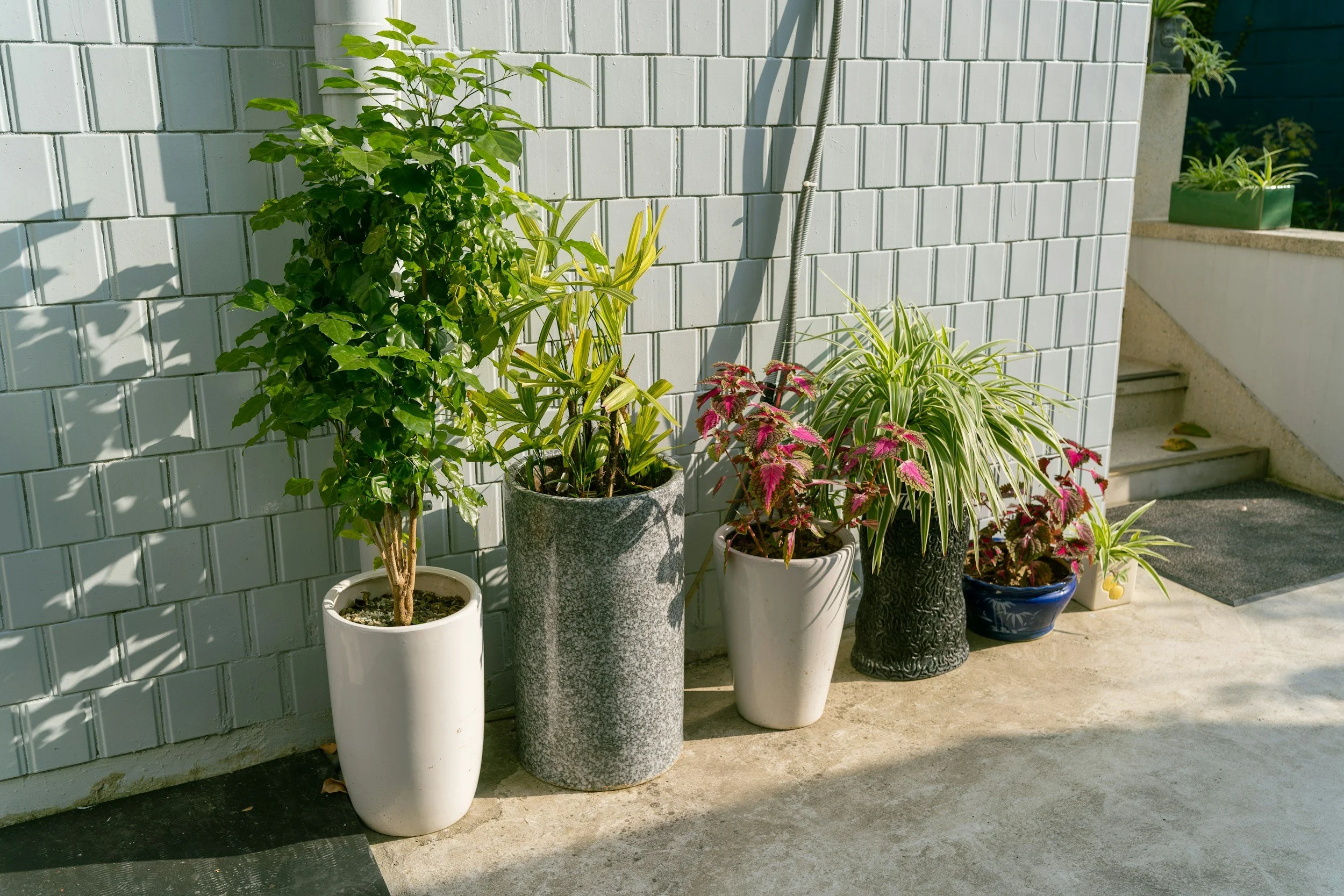
Reconstituted stone and concrete tubs (Alpine troughs and jardinières)
Less expensive than real stone (and lighter) weather well. Poly resin or polyethylene pots
Make handsome reproductions of classic containers, ranging from the familiar faux terracotta to washed stone, cast iron, sandstone, stoneware and faux wood.
Terracotta
Terracotta is a classic for good reason. The unglazed clay pots blend effortlessly into any garden setting and add instant charm. Clay is porous so that the plant roots are provided with good drainage and air circulation.
Is thick so it protects plants from sudden temperature changes, does not blow over as easily and provides good support for top-heavy plants. Soil expands and contracts, and it freezes and thaws. This movement is often enough to crack the container. Its Achilles heel is that is breaks easily. Store inside or protected in winter.
Wooden barrels and window boxes
To increase the life of your window box, use a plastic liner that you place inside the window box and ensure that you have adequate drainage holes.
Look for wood that has been painted with non-toxic wood preservative and colored wood stain or paint.
Choose rot-resistant wood such as cedar and red wood. Pine is a good choice but will need wood preservative and three coats of paint.
The wood on any container should be at least 1-inch thick. Wood containers are good insulators; soil retains its moisture in the middle of the summer and does not overheat. It is best to raise wooden tubs off the ground so water does not pool under the container; place bricks underneath to prevent rot and improved drainage.
Galvanized containers
Do not rust, but they do warm up in the summer sun and are best used in partial shade.
Make sure there are drainage holes; if not get a masonry bit and drill a hole
Planning Your Container:
Thriller, filler and spiller method.
One theory for choosing plants to make an exciting display is the thriller, filler and spiller concept.
Thrillers are tall, like New Zealand flax, and placed at the back or in the middle of the container depending upon how the container is going to be viewed. If it’s up against the wall of your house it will be likely placed at the back. These plants have striking features and create a focal point. Vertical plants that give the container height can be accents.
Fillers add mass and color. Mounding plants in the center that cover up bare spaces while adding depth and fullness.
Spillers tend to spill out over the edge of the pot like ivy or any trailing plant.
Location- sun or shade plants.
Nurseries usually have the sun or shade requirements on the label. Choose plants that all need the same conditions. What color is the background? Is the planter against your house? Keep the house color in mind when choosing your plant colors. What color is the container? Tie it in with your flower color or choose a neutral color, like black, white or gray.
Size of container- height of the container vs height of plants.
Plants should be no higher than 1.5 times to 2 times the height of the container when fully grown. If it’s going to grow to be 5 feet tall and the container is 1.5 feet you need a taller container.
Other design considerations:
Foliage – is very important as it provides contrasts and texture after the flowers are gone. Fine textures are feathery and delicate, bold textures create an impact and focal points.
Repetition – is as important for container designs as it is for garden design. When there is too much variety the eye does not have a resting point. Repetition creates continuity and ties it all together. Using plants with the same color or shape can tie it all together. Conversely using the same plant in different colors effectively creates a sense of continuity. For e.g. a rose garden.
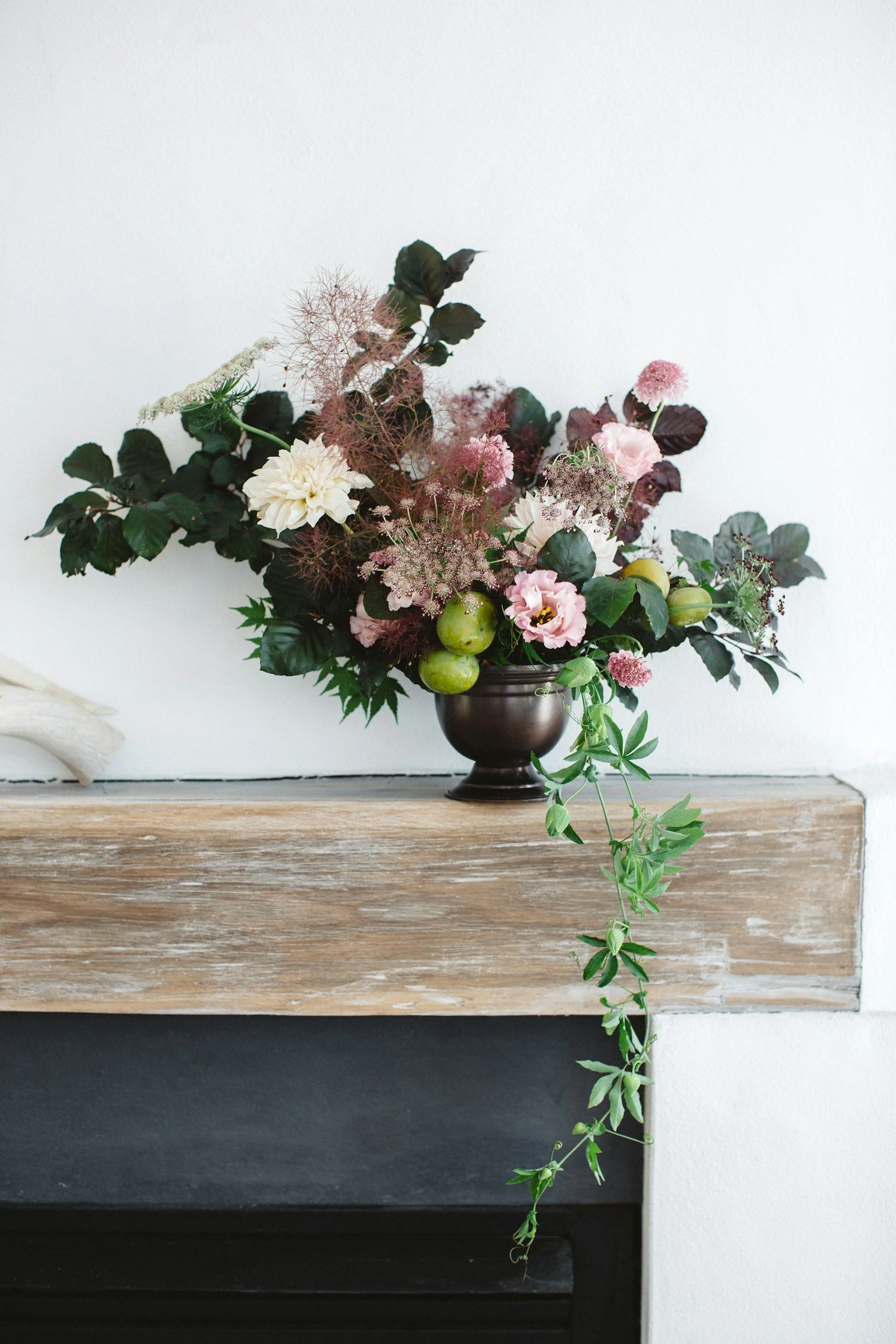
Color Wheel
Designing with color is fun. Experiment with it to see what you like. Some colors are hot (red, orange and yellow) and tend to jump out at you while other colors are cool (blue, purple and green) tend to recede into the background). Color can be bold and playful or restrained and calming. Color can brighten up a dark corner, add depth and interest to any design.
White is not on the color wheel but can bring out the intensity of another color.
Primary colors
Red, yellow, blue, equidistant on the color wheel
Secondary colors
Mixing 2 primary colors together, red and yellow make orange, yellow and blue make green, red and blue make purple (violet).
Intermediate or Tertiary colors
Colors that are made by mixing a primary and a secondary color eg, Blue and green =blue green, red and violet =red violet, yellow and orange +yellow orange.
Neutral colors – black, white and gray
Hue are a name for a pure color that contains no black, white or gray
Tints are colors mixed with white
Tones are colors mixed with gray
Shades are colors mixed with black
Saturation is the intensity of the color, how bright or dull it is.
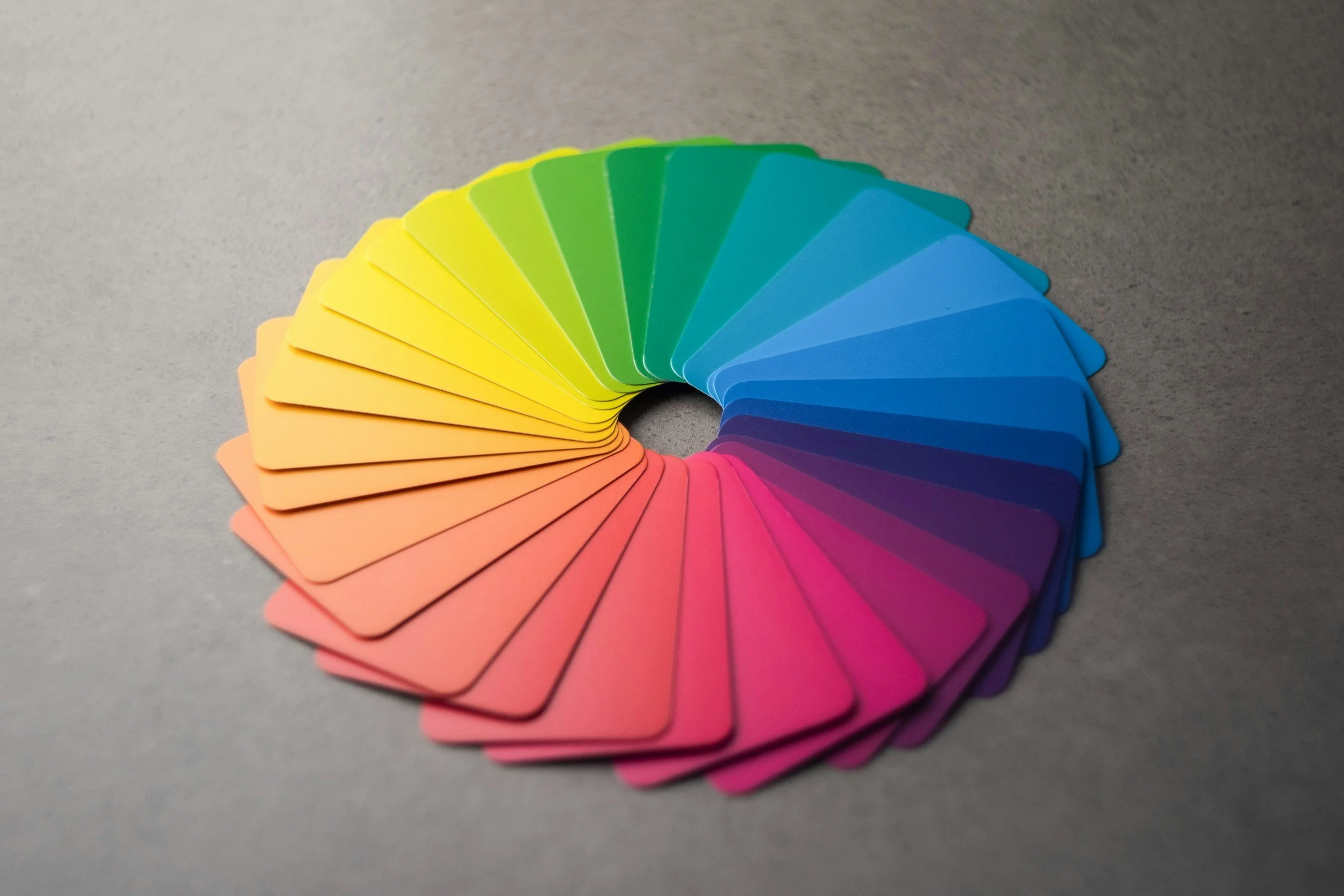
How do we create color schemes?
Monochromatic
Using one color with its different tints, tones and shades.
Analogous (Harmonious)
Using colors that lie next to each other on the color wheel. They share similar colors and blend with each other, creating very little contrast. This can be very elegant and restful with cool colors or very cheerful with hot colors.
Complementary (Contrasting)
Using colors that are opposite each other on the color wheel. These combinations stand out and provide high contrast. Often used in advertising as they get attention. E.g. Red and green, blue and orange, yellow and purple.
Notice any associations with some of these color combinations and particular holidays?
How do we use this information in planning our containers?
When combining remember to use repletion.
Choose your dominant color (s), (maybe a favorite color), and accent them with subordinate colors.
Pale colors like white and yellow reflect light and illuminate shady spots
Bright colors work well in full sun
Cool colors, blues and purples, and pale shades create a sense of depth in the garden and recede. Bright colors make the garden look closer
Combining different shades of green from chartreuse to silvery blue – green can create exciting compositions. Remember to use foliage texture.
Silver foliage picks up light and creates drama
Select plants that like similar conditions, sun vs shade.
What backdrop does the container sit against.
Care of planters
Soil needs to be potting soil, not garden soil. Potting soil has water retaining properties, lighter and initially some have a small amount of fertilizer.
If it is a large container fill the bottom with stryfoam blocks or pellets (so it is not so heavy).
Use landscape pots as an inner container, so you can change out containers through the seasons and for ease of transplanting and changing the container design.
Do not let them dry out. Water regularly when top is dry. Use your finger.
Water the roots. Not the foliage ( increase risk of mildew, mold, rust and other viral diseases). Water , let the water soak in and do it again.
If it is hot you may need to water a couple of times a day.
If they dry out ( hydrophobic soil; the soil will not absorb water, it is too dry) and the water is pouring through them. Place the entire container in a big tub of water and let it soak until there are no more bubbles of air coming up.
Fertilize with a slow-release fertilizer or liquid fertilizer. 20- 20 – 20. You are watering lots and flushing out nutrients.
Going on holidays. Put all your containers, hanging baskets, etc in the shade together so whoever is looking after them can water all in one spot and they will not dry out as fast in the shade.
So, we hope you will try choosing a color scheme and have some fun experimenting the next time you plant your containers.